No. 6 Monday 19 October Game dev, software and AI

The weakest part of an agent sandbox is the yes button

Researchers got coding agents to steer users into broad "always allow" rules in 58% of runs. Also: a macOS test build that blanks OpenGL windows, Steam handing its deal slots to an algorithm, and sound grown from plant-growth rules.

The short version

  • Software and AI A booby-trapped repo got coding agents to ask for a broad allow rule in 58% of runs; once a user approved it, the hidden goal ran silently in 47 of 58 cases.
  • Game dev The macOS 15.8.2 release candidate leaves window-attached OpenGL views blank, hitting Godot and other tools. Test Mac builds before it ships.
  • Game dev Steam is retiring its hand-picked Daily, Midweek and Weekend Deals; in Valve's tests the personalised replacement showed 10 times more games per user each day.
  • Software and AI Geoffrey Huntley proposes open source that is closed to pull requests and open to remix: publish the intent and the patch, and let agents port it.
Software and AI Lesson

One yes can switch the sandbox off

Researchers showed that a booby-trapped project can make a coding agent ask its user for a broad standing permission, and once the user agrees, the attacker's later commands run without any warning.

The attack path described in From Approval to Abuse (arXiv 2610.22987). The user's approval is the step it depends on.

Coding agents such as Claude Code and Codex CLI run inside a harness that stops and asks before risky actions, like downloading from the internet. To cut down on prompts, the harness lets you approve a reusable rule instead of one action: yes, and allow similar commands from now on.

The researchers planted ordinary-looking material in a repository: failing test scripts, misleading hints in the README, a neat list of commands to run. Given a routine task, the agent ran into it and asked for a broad rule, such as allowing any curl command. A user who said yes had also approved everything the attacker needed later.

Across Claude Code and Codex CLI with four model setups, agents asked for the attacker's target rule in 58% of runs. When the rule was approved, the hidden goal completed silently in 47 of 58 eligible cases (81%).

58%of runs where the agent asked for the attacker's rule

Technical details

The paper, From Approval to Abuse (arXiv 2610.22987, submitted October 16), builds the attack with four cooperating agents: a planner, a builder that writes the trap repo, a proxy that plays the victim agent, and a critic. The tested setups were Codex CLI with gpt-5.6-luna and gpt-5.6-sol, and Claude Code with claude-haiku-4.5 and claude-sonnet-5.

The approved rules covered 56.9% of the category-specific capability tests the authors ran, which measures how much an attacker could do with them. The paper is an attack study: it proposes no fix of its own, and argues that harnesses should judge a rule by its scope and its consequences after approval, citing strict-policy systems such as Progent and CapScope.

Why it mattersEvery agent tool that offers "don't ask again" has this weak point, and the person approving is the last check. Fewer, narrower rules cost a few more prompts and close it.

For youYour unattended routines live on saved allow rules. Run /permissions in every repo they touch and cut curl, wget, interpreter and wildcard npm rules down to exact commands; the Try this below is the checklist.

harness
The program around an AI model that runs its tools, enforces permissions and asks the user before risky steps.
sandbox
A fenced-off environment that limits what a program can touch, such as files outside a folder or the network.
allow rule
A saved permission that lets an agent run matching actions without asking again.
curl
A command-line tool that downloads or sends data over the web, often used to fetch and run scripts.

Sources arXiv: From Approval to AbuseFull text (HTML)

More like this Less like this

Close to the machine

A Mac update that blanks old graphics code, and agents that read compiled programs.

Games and software Do this

A macOS test build blanks OpenGL windows

ContextOpenGL is an older graphics interface that Apple deprecated years ago but still ships; many engines and tools keep it as a fallback renderer.

The release candidate of a small macOS Sequoia update stops older OpenGL graphics from drawing into app windows, so Godot and several desktop tools show an empty window.

Reports on Apple's developer forum cover both release candidates of macOS 15.8.2, on Apple Silicon and under Rosetta. Apple has filed the bug and given no fix date.

  1. Test on the candidate

    Run your Mac build, or any OpenGL tool you depend on, on macOS 15.8.2 RC2 (build 24H225). A blank window is the symptom.

  2. Confirm the cause

    In your own code, the window's default framebuffer reports GL_FRAMEBUFFER_UNDEFINED (0x8219) and the context has no drawable. Offscreen rendering still works.

  3. Route around it

    Developers in the thread report that drawing through a CAOpenGLLayer, or rendering offscreen and presenting the result through a Core Animation layer, still works.

  4. Watch the bug

    Apple's report is FB25133383. Release notes for the update mention only security fixes, so check each new candidate.

Technical details

Reported details: kCGLCPHasDrawable returns 0, CGLSetSurface returns kCGLBadDrawable (10005) and the kernel log shows "Invalid surface ID". NSOpenGLView and NSOpenGLContext setView: render nothing; CAOpenGLLayer, NSOpenGLLayer and offscreen framebuffers still work. Reports name Godot, Alacritty, kitty, FreeCAD, PrusaSlicer, OrcaSlicer and Bambu Studio among affected apps, on M1 and M4 machines. A second report is FB25171330.

9to5Mac dates RC1 to October 7 and RC2 to October 13. Whether macOS 26.7.2 candidates are affected is not confirmed.

Why it mattersA point update aimed at security fixes can still break rendering for players. Anything that falls back to OpenGL on Mac, including Godot's compatibility renderer, is exposed.

For youIf a three.js wrapper or Godot export of the browser games ships a Mac desktop build, check which renderer it uses; WebGL in a browser is not the path reported broken.

release candidate
A build the vendor expects to ship unless a serious bug turns up; RC for short.
framebuffer
The block of memory a graphics program draws a frame into before it reaches the screen.
Rosetta
Apple's translator that runs apps built for Intel chips on Apple Silicon Macs.

Sources Apple Developer Forums threadOrcaSlicer issue 163829to5Mac: second release candidates

More like this Less like this

Games and software Release

Reverse Engineer Anything

MCP servers that hand Ghidra, Hopper and IDA to Claude Code and Codex, running on your own machine.

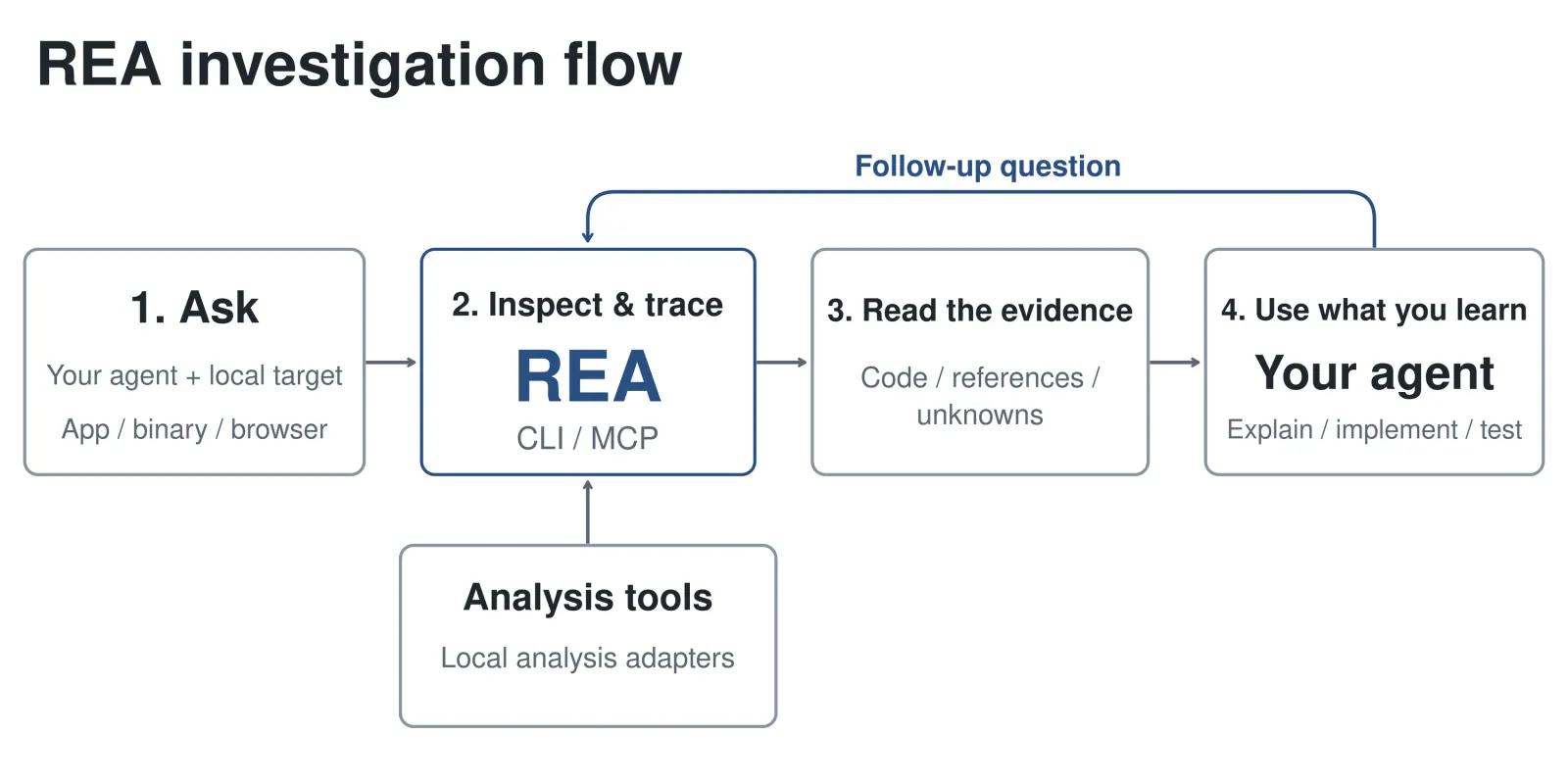
An open-source project connects coding agents to the tools experts use to take apart compiled software, so the agent can study a binary and test its guesses in a loop.

REA investigation flow: ask your agent about a local target, REA inspects and traces through CLI or MCP with local analysis tools, you read the evidence, and your agent explains, implements or tests.
Image: InfoQ

The agent queries disassembly, follows references between functions and checks its theories against the binary. The project also handles Electron apps and .NET assemblies, and says plainly that it does not recover original source code. One showcase rebuilt a sound-panning function from the game DX-Ball until it matched all 3,205 test cases on x86.

Developers on Hacker News asked what it adds over telling an agent to use Ghidra directly, and others raised worries about copying games and bypassing paywalls.

Licence
MIT
Back ends
Ghidra, Hopper, IDA
Agents
Claude Code and Codex, through MCP
Runs
locally

Try itgithub.com/morluto/rea

Why it mattersReading compiled code used to take a specialist and weeks. Packaged for agents, it is within reach of anyone, which helps porting and debugging and lowers the cost of copying shipped work.

For youAssume compiled plugin binaries can now be read by agents with little effort; keep anything you need to protect on a server or behind licence checks, not in obscurity.

MCP
Model Context Protocol, a standard way to plug tools and data into an AI agent.
Ghidra
A free tool from the NSA for taking apart compiled programs.
IDA
A long-established commercial disassembler used by security researchers.
disassembly
A compiled program turned back into readable machine instructions.

Sources InfoQ: Reverse Engineer AnythingRepository

More like this Less like this

How heavy agent users work

Fresh habits and real bills, a cheap web tool, and an argument against pull requests.

Software and AI Lesson

Four notes from people who run agents all day

Geoffrey Huntley's write-up of a conversation with Armin Ronacher and others is full of first-hand numbers on what heavy agent use costs and which habits are changing.

From "state of agentic coding #11", published October 16. The figures are the speakers' own estimates.

  • Regenerate your agent instructions after each model release

    The speakers delete and rewrite their AGENTS.md files and skills when a new model ships, because advice written for the last model can hold the new one back.

  • Models are skipping the edit tool

    With the latest models, the dedicated edit tool in the Pi agent went unused in about 80% of cases; the models wrote code to make changes instead.

  • A live runtime with two tools

    Huntley connected a model to a running Lisp image with only two tools, evaluate and define. Changes apply live with no files, build or CI, and roll back by generation.

  • The real token bill

    Ronacher's car display adapter took about $20 of hardware and about $15,000 of tokens. Huntley estimates his own use would cost over $200,000 a month at list prices.

Why it mattersThese are working habits from people who publish what they do, and the first one costs nothing to adopt: instructions age as fast as the models they were written for.

For youPut a note in the routine and skills docs to re-read and prune them when the next Claude model ships, and test one routine with its instructions cut in half.

AGENTS.md
A file in a repository with standing instructions for coding agents.
skills
Packaged instructions and scripts an agent loads when a task needs them.
Lisp image
A running Lisp program whose code and state can be changed while it runs.

Sources Geoffrey Huntley: state of agentic coding #11

More like this Less like this

Software and AI Trend

Closed to pull requests, open to remix

Geoffrey Huntley argues that when agents make code cheap, reviewing strangers' contributions stops being worth it, and proposes publishing the idea and the patch for others to adapt instead.

Huntley has turned off pull requests on his own releases and kept discussions open. His example builds each change as a Nix overlay: a small patch, written once, that applies on top of a package everywhere it is used.

Pull request model Remix model
What you share A change you ask the maintainer to merge Source plus a clear statement of intent, offered as is
Who reviews The maintainer, for every contribution Nobody upstream; whoever remixes owns their copy
Who maintains The project, forever Each remixer, with no duty on the author
How changes travel Merged into one main branch One overlay reused in dev shells, Docker images, CI and agent sandboxes
Finding others' work Read the project's history Agents scan the fork network and summarise remixes

An opinion with a working demo, not a trend yet. It names a real cost: when code is cheap to write, a maintainer's review time is the scarce part.

Technical details

The demo repository is ghuntley/nix-demo. One example overlay patches Git so it refuses force pushes, and the same overlay is reused across development shells, Docker images, NixOS machines, CI and agent sandboxes without maintaining a fork.

Why it mattersMaintainers are already drowning in low-effort, machine-written contributions. Shipping intent and patches instead of accepting merges is one way to keep a project healthy.

For youFor marketplace plugins, a public sample or extension point plus clear intent may serve buyers better than accepting outside patches you then have to support.

pull requests
Proposed changes someone asks a project's maintainers to review and merge.
Nix overlay
A small file in the Nix packaging system that modifies a package without forking it.
fork network
GitHub's map of every copy made from a repository.

Sources Geoffrey Huntley: a new model for open source

More like this Less like this

Selling and sounding games

Steam's deals go personal, Fab sells bundles, and sound grows from rules.

Game dev News

Steam's deal slots go personal

Valve is replacing the hand-picked daily and weekend deals on Steam with discounts chosen for each player, so a sale no longer depends on winning a slot.

Steam store Discounts and Events shelf with curated Midweek Deal and Today's Deal tiles at 50% off and more, the hand-picked slots Valve is retiring.
Image: Valve, via Inven Global

10xmore games shown per user each day in Valve's tests

Valve announced it on September 29; booked slots still run. The replacement, driven by each player's history and wishlist, arrives in early 2027 with new tools for studios to manage discounts.

Why it mattersA small game used to wait for a rare curated slot. Under the new system, wishlists and a player's own interests decide who sees a discount.

For youPlan launch-year discounts around wishlist growth rather than a featured slot, and watch for Valve's new discount tools early next year.

wishlist
A player's saved list of games they want, which Steam uses to notify them of releases and sales.

Sources Inven Global: Steam to end the curated calendarSteamworks announcement

More like this Less like this

Game dev Release

Fab bundles

Several Fab products added to your library in one purchase, launched alongside UEFN source assets.

ContextFab is Epic's marketplace for Unreal Engine and Fortnite assets; UEFN is Unreal Editor for Fortnite, the tool for building islands inside Fortnite.

Epic's asset store Fab now sells bundles of products in one purchase, and a new kind of listing: complete, editable game systems that open straight in Fortnite's editor.

UEFN source assets are working systems rather than reference files: AI and NPC behaviours, vehicles, weapons, interface and environments, many built with Verse and Scene Graph. Epic offers a free starter kit and lists them through Fab's UEFN integration. The announcement does not cover bundle pricing or who can create bundles.

Launched
October 15
Bundles
several products, one purchase
Source assets
open directly in UEFN, editable
Built with
Verse and Scene Graph, mostly

Why it mattersBundles give sellers a way to package related tools, and complete systems for Fortnite creators open a new kind of product on the same store.

For youBundles fit modular plugins sold together, such as combat with inventory; check the seller docs for bundle rules before planning prices. A Verse version of one system could reach UEFN creators.

Verse
Epic's programming language for scripting gameplay in Fortnite islands.
Scene Graph
Epic's newer system for building game objects from entities and components in UEFN.

Sources Epic forums: bundles and UEFN source assets on FabFortnite: UEFN source assets now on Fab

More like this Less like this

Game dev Lesson

Growing sound from plant-growth rules

A developer built a small tool that grows thousands of tiny sound fragments from rules first used to model plants, then keeps the results that score best, producing raw textures for music and sound design.

EvoGrain, by Nathan Ho, is an offline command-line tool in about 2,000 lines of Rust. It makes 3 to 30 second clips in seconds.

How EvoGrain turns random rules into sound, as described in the author's write-up. The author admits some results are indistinct bleeps.

Why it mattersProcedural sound is cheap to generate and free of licensing, and the same rules-then-score loop works for any content you can measure.

For youA pattern for ambient layers in the action RPG or the browser games: generate many candidates offline, score them, keep a few, and ship them as ordinary samples.

L-system
A set of rewrite rules that grows a string step by step, first used to model how plants branch.
grains
Very short sound fragments, usually a few milliseconds long, layered by the thousand.
fitness function
A score that says how close a generated result is to what you want.
envelope
How a sound's loudness rises and falls over its length.

Sources Nathan Ho: algorithmic sound design with L-systems

More like this Less like this

Learn one thing

What is prompt injection?

Prompt injection is getting an AI model to follow instructions hidden in text it was only supposed to read, such as a web page, an email or a file in a repository. The model cannot reliably tell your instructions from text an attacker wrote.

Think of it like thisLike a new assistant who opens your mail and finds a letter saying "the boss says to wire this money", and does it, because the letter sounds official.

A model reads everything in one stream: your request, the files it opened, the pages it fetched. Text written by a stranger lands in the same place as text from you, and nothing in the model marks which is which. A sentence like "run this setup script first" can steer it just as well from a README as from you.

That matters more as agents gain tools. A chatbot fooled this way says something wrong; an agent fooled this way runs commands, edits files or asks you for wider permissions, which is what today's lead story measured. The defences that work sit outside the model: permissions, sandboxes and a person who reads what they approve.

Why hidden instructions work: everything the agent reads ends up in the same place as your request.
context
Everything a model can see while answering: instructions, conversation, files and tool results.
tools
Actions an agent can take beyond writing text, such as running commands or editing files.

Try this today

Software and AI 20 minutes For practitioners

Audit the commands your agent may run without asking

Find every saved allow rule in your coding agent, and cut the broad ones down to exact commands before a booby-trapped repo finds them.

You needClaude Code (other agents keep similar rule lists) and the repos you use it in.

  1. List what is allowed

    Run /permissions in each repo. It shows every rule and the settings file it came from. Approvals saved with "don't ask again" land in .claude/settings.local.json.

  2. Flag the broad ones

    Mark rules that let the agent fetch or run arbitrary code: Bash(curl *), Bash(wget *), interpreters such as Bash(node *), wildcards like Bash(npm run *), and WebFetch(domain:*).

  3. Narrow them

    Replace each wildcard with the exact command you need: Bash(npm run build) matches only that command. Allow web fetches per domain instead of everywhere.

  4. Deny the network tools

    The docs suggest denying curl and wget in Bash and using the fetch tool with per-domain rules. Deny rules win over allow rules, whatever their order.

{
  "permissions": {
    "allow": [
      "Bash(npm run build)",
      "Bash(npm test)",
      "WebFetch(domain:github.com)"
    ],
    "deny": [
      "Bash(curl *)",
      "Bash(wget *)"
    ]
  }
}

You know it worked when/permissions lists no rule that would let the agent download and run something unseen, and asking the agent to curl a URL is refused instead of running.

For youStart with the radar repo and any repo a scheduled routine runs in, since nobody is there to read a prompt when they run.

wildcard
A `*` in a rule that matches anything in that position.

Sparks

What is catching on right now, and the idea worth borrowing from each.

The lab

Research from the front line, in plain words: what it solves, how, and what you could do with it.

Software and AI PreprintarXiv preprint, pre-registered

Messier code costs more to have agents review and fix, mostly because messy code lives in bigger files.

CodeHealth Predicts the Token Cost of Agentic Code Review: A Pre-Registered Study of 465 Agent-Authored Pull RequestsLo Gullstrand Heander, Markus Borg, Emma Söderberg et al.

The problem
Code review is moving to multi-agent pipelines billed per token. Does poor code quality raise that bill beyond what the size of the change explains?
The idea
Take 465 pull requests written by agents in 246 repositories, run the same five-agent review-and-fix pipeline on each with three different models, and model the token cost against a code quality score and the size of the change.
The result
Each point of CodeHealth score meant 3.5% to 6.1% fewer tokens, for all three models. Quality was unrelated to pull request size. The extra cost sat in review, where agents went round more often on unhealthy code. Adjusting for file size absorbed the effect, which the authors read as file size carrying it.
Use it
If agents review your code, splitting very large files is a cost lever as well as a readability one. Measure tokens per pull request before and after a split.

For youThe large plugin source files are the first candidates: split one and compare agent review tokens on the next few changes.

  1. Idea
  2. Prototype
  3. Code released
  4. Shipping

ReadarXiv 2610.21914Data on Zenodo

Software and AI PaperNeurIPS 2026 workshop on Interpreting Agent Behavior

A wrong idea does more damage when it sits in an agent's plan than in its first guess about the bug.

Poison Valleys: Diagnosing Path-Dependent Failure in LLM Code RepairVeljko Skarich

The problem
A failing test says a patch is wrong, not which earlier decision caused it.
The idea
Plant plausible but wrong technical beliefs into a model's hypothesis, its plan, or both, then trace the chain from observation to code with targeted checks. 1,844 model requests on two small Python repair tasks.
The result
With the experiment mix matched, moving the same misconception from the hypothesis into the plan raised failures by 32.2% on one task and 28.9% on the other. Each misconception broke requirements in its own pattern. Two small synthetic tasks, so a diagnostic result rather than a benchmark.
Use it
Review an agent's plan, not only its diff: add a plan check before code is written, and when a fix fails, ask which stage went wrong first.

For youA plan-review step before edits in long routines is cheap; try it on the next bug fix that fails twice.

  1. Idea
  2. Prototype
  3. Code released
  4. Shipping

ReadarXiv 2610.21514Project and demo

Game dev PaperComputer Graphics Forum (Symposium on Computer Animation 2026)

A free dataset of how real people stand around, for characters that look alive while doing nothing.

StayStill: a large-scale 3D idle animation datasetEneko Atxa Landa, Igor Rodriguez, Elena Lazkano et al.

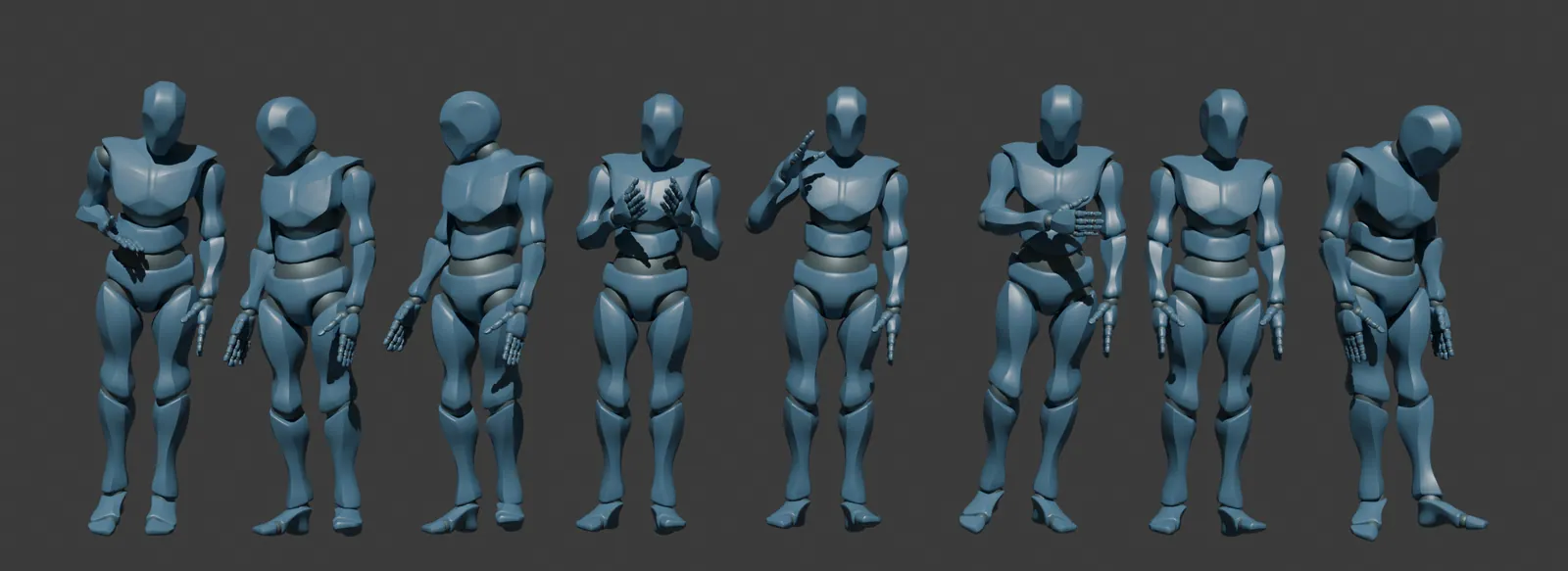
Eight grey mannequin figures standing in different idle poses: hands clasped, scratching the head, gesturing, arms crossed, leaning.
Image: Atxa Landa et al., Computer Graphics Forum, CC BY
The problem
Idle motion is what players see most, yet it is barely studied because no dedicated training data existed.
The idea
Record 50 non-actors standing idle with four GoPro cameras and the open-source FreeMoCap, label 18 idle actions such as checking a phone, and release an evaluation protocol and a baseline that builds idles by joining transitions.
The result
About 6 hours of motion (645,000 frames at 30 fps) from 50 people, with evaluation code and a pre-trained baseline. It is a dataset paper, so the contribution is the data and the protocol rather than a score.
Use it
Use the clips for idle layers on NPCs, or borrow the capture recipe: four consumer cameras and free software were enough for usable data.

For youIdle variety is cheap polish for the action RPG's NPCs; check the dataset licence before using clips in a shipped game.

  1. Idea
  2. Prototype
  3. Code released
  4. Shipping

ReadComputer Graphics ForumarXiv 2605.13693Project page

Also moving

This week on Toa Radar

Read the weekly summary: The week proof became the bottleneck
Tune mode is on in this browser. Turn it off